GainStage Editorial may earn a sales commission when you buy through our audio gear links, at no additional cost to you. How GainStage Editorial earns affiliate revenue
Choosing a music studio desk is an exercise in acoustic geometry and physical ergonomics. Unlike a standard office desk, a purpose-built music workstation manages signal flow, aligns studio monitors with your ears, and holds heavy gear like MIDI controllers, audio interfaces, and 19-inch rack hardware without cluttering your primary workspace.
This guide breaks down key studio desk considerations—including listening depth, keyboard tray clearance, and surface management—and evaluates practical options available for home and project recording spaces based on seller claims and studio design principles.
Key Ergonomic and Acoustic Considerations
When selecting a studio desk, three physical dimensions dictate whether your setup will support long production sessions without physical strain or acoustic distortion:
- Working Depth (Front-to-Back): Proper stereo imaging requires your ears to sit roughly 3 to 4 feet from the tweeters of nearfield studio monitors (TouchDaw). A shallow desk forces speakers too close to your listening position or forces you to cram nearfields against walls, worsening boundary bass reflections. A minimum working depth of 28 inches is recommended for nearfield monitors, while 32 to 36 inches accommodates desktop hardware controllers in front of you (TouchDaw).
- Keyboard Clearance: If you use a 49-, 61-, or 88-key controller, a dedicated sliding tray or recessed piano shelf keeps your forearms near a 90-degree angle without raising your main desktop height to an uncomfortable typing or mixing position.
- Monitor Shelving & Ear Alignment: Positioning high-frequency tweeters at ear level prevents off-axis frequency loss (MusicProductionWiki). Fixed raised shelves help lift speakers to ear height without requiring separate floor stands, provided the shelf height matches your seated ear position.
Featured Studio Workstations
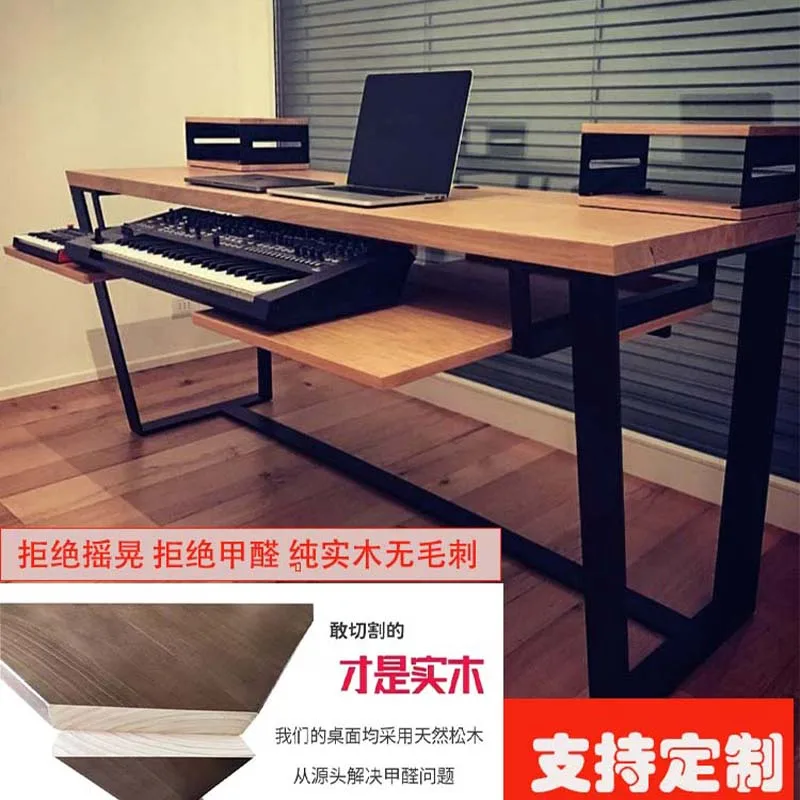
The Solid Wood Music Production Desk from Coofull Furniture is listed as a customizable workstation tailored for piano and recording environments. Constructed from solid wood materials, it offers an option for engineers and composers who prefer natural wood framing over synthetic particle board. When purchasing customizable furniture online, verify exact dimensions, lead times, and assembly requirements with the seller prior to ordering.
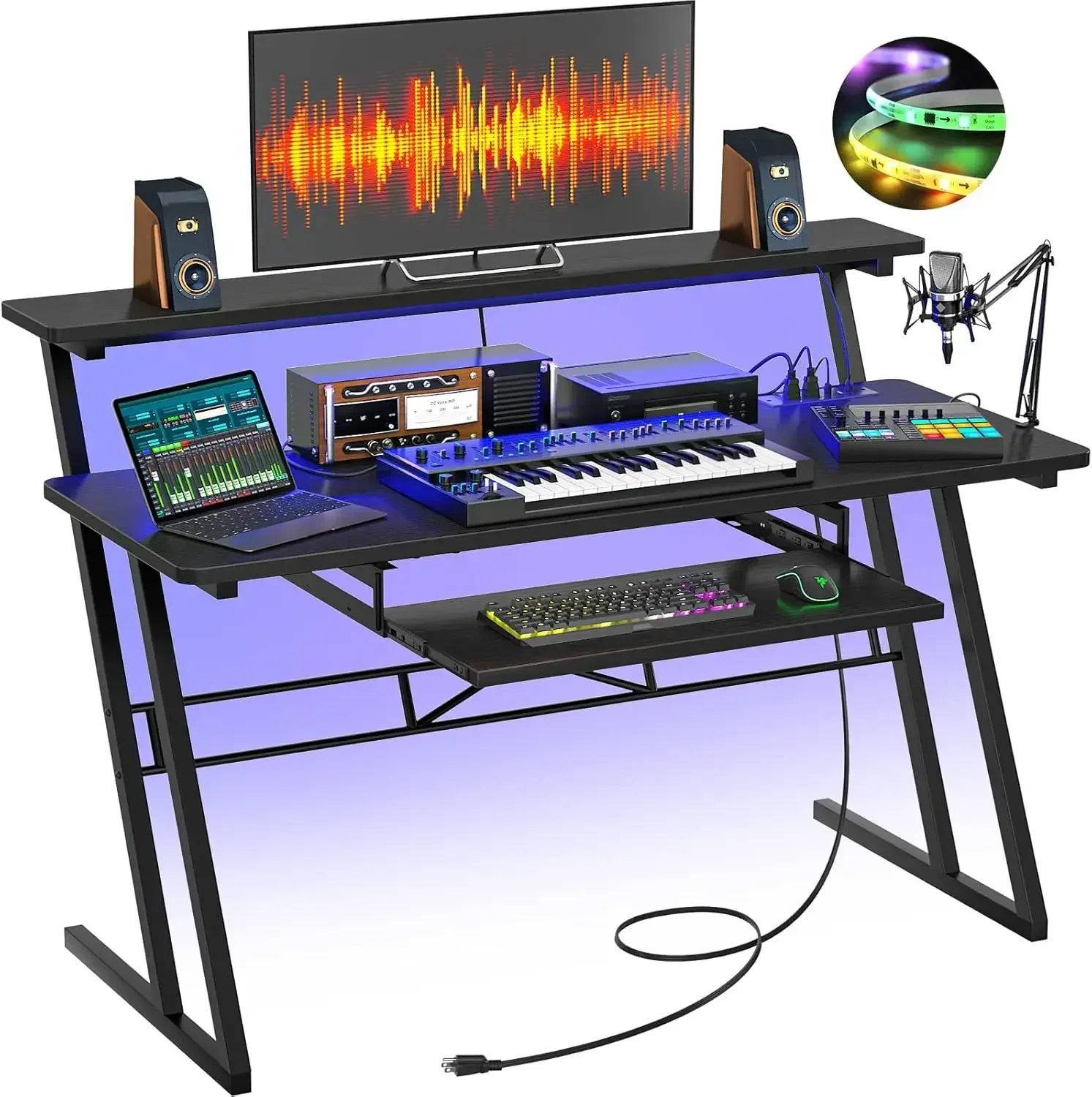
For setups centered around computer-based production and desktop gear, the Blisslyn Music Studio Desk incorporates integrated power outlets and RGB LED lighting. Onboard power points simplify cable routing by allowing audio interfaces, laptops, and synth modules to plug directly into the desk frame, reducing floor cable clutter. Check the total amperage rating of the integrated outlets to ensure it matches your equipment draw.
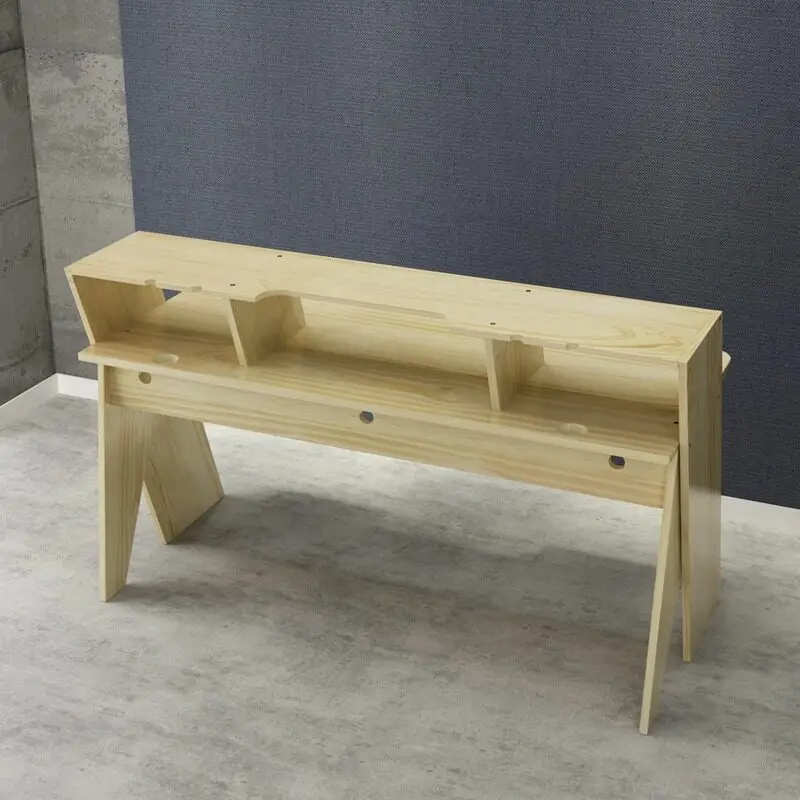
Designed specifically with sound engineers and keyboard players in mind, this Solid Wood Piano Desk Workstation provides a dedicated surface structure for housing mixing consoles and electronic keyboards. Solid wood construction aids structural stability when supporting weighted keybeds or heavy outboard gear, though buyers should verify the internal height and width of the piano cutout or shelf against their specific controller dimensions.
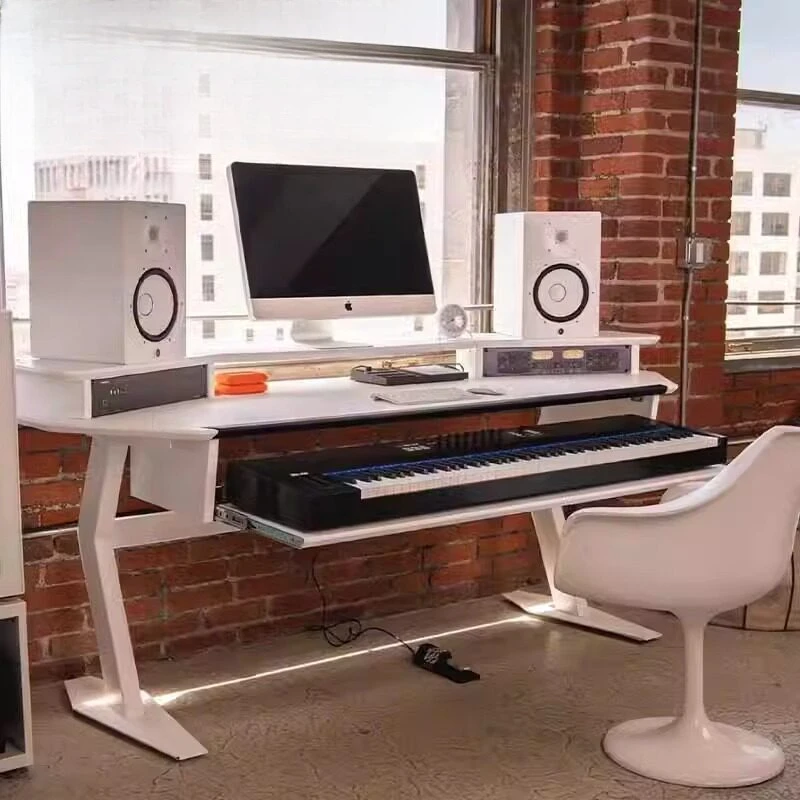
With a minimalist aesthetic, this Solid Wood Workbench caters to streamlined home studios where visual clutter needs to be kept to a minimum. It combines a clean top surface with structural capacity for electronic keyboards or desktop mixing equipment. Minimalist designs offer generous legroom but often lack integrated rack rails, making them best suited for software-focused producers using desktop audio interfaces.
Comparison of Featured Models
| Desk Model | Stated Primary Material | Key Integrated Features | Ideal Setup Type |
|---|---|---|---|
| Coofull Customizable Piano Desk | Solid Wood | Customizable layout options | Recording & piano setups needing tailored sizing |
| Blisslyn Workstation Desk | Not specified | Built-in power outlets, RGB lighting | Modern DAW producers and content creators |
| Coofull Sound Engineer Console Desk | Solid Wood | Mixing console / piano layout surface | Sound engineers and synth/piano players |
| Coofull Minimalist Workbench | Solid Wood | Minimalist architectural frame | Clean home studios focused on controller & laptop workflows |
Verification Checklist Before You Buy
Because furniture specifications and shipping conditions vary across online marketplaces, run through this pre-purchase verification list before committing to a desk:
Buyer Checklist
- Measure Your Keyboard Depth and Height: Measure your MIDI controller's total height, depth, and width (including knobs and pitch wheels). Ensure any under-desk tray provides at least 1–2 inches of vertical clearance above the highest knob.
- Confirm Frame Load Limits: If placing heavy solid-wood consoles, studio monitors, or multi-channel interfaces on raised shelves, confirm weight capacities with the seller documentation.
- Verify Cable Management & Electrical Safety: For desks with integrated outlets, confirm plug type compatibility and regional electrical certifications with the manufacturer.
- Check Shipping Assembly Requirements: Flat-packed solid wood furniture often requires flat-surface assembly, hex keys, or specialized tools. Review seller notes regarding flat-pack weight and package dimensions.
By balancing ergonomic depth requirements, physical equipment dimensions, and reliable cable management, you can select a music studio desk that keeps your production workflow comfortable and acoustically balanced.